Industrial-Scale Membrane Manufacturing & Casting

Overview
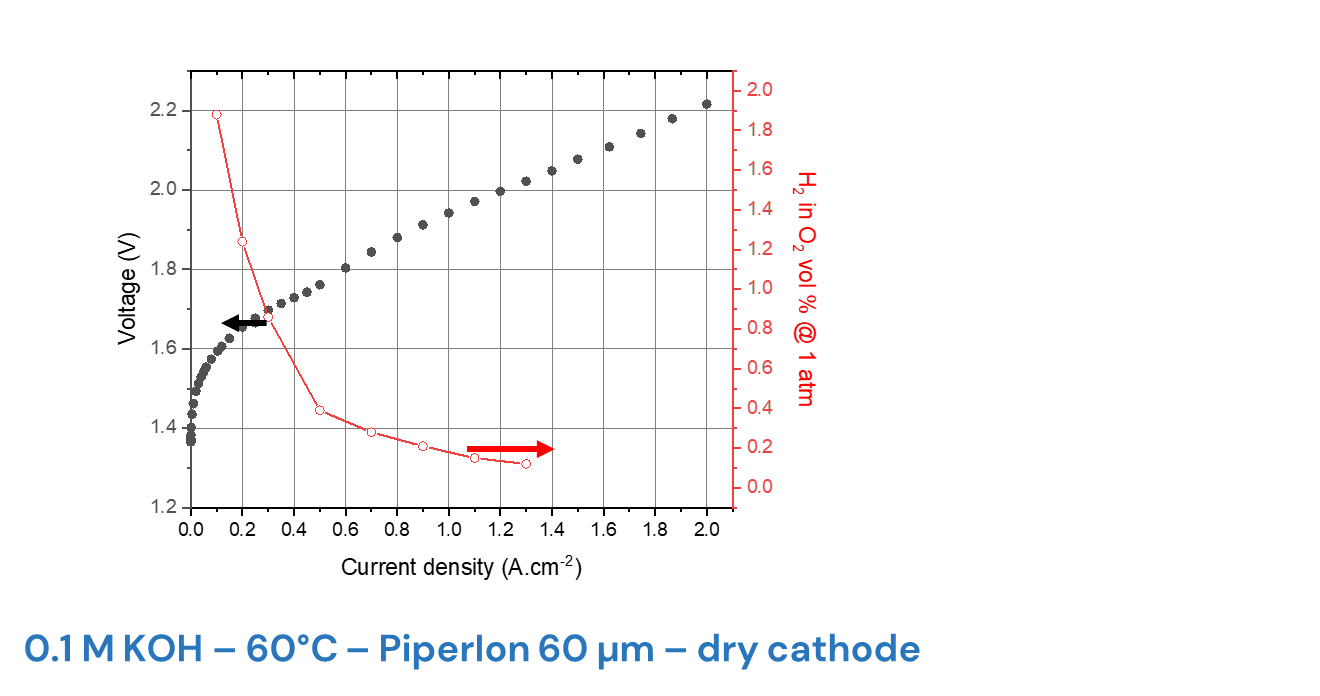
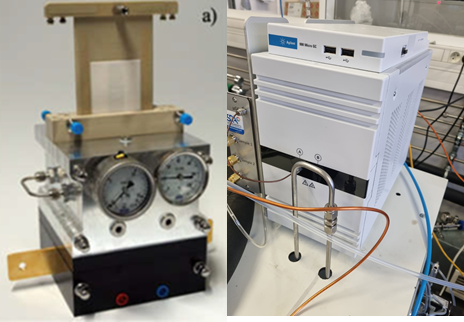
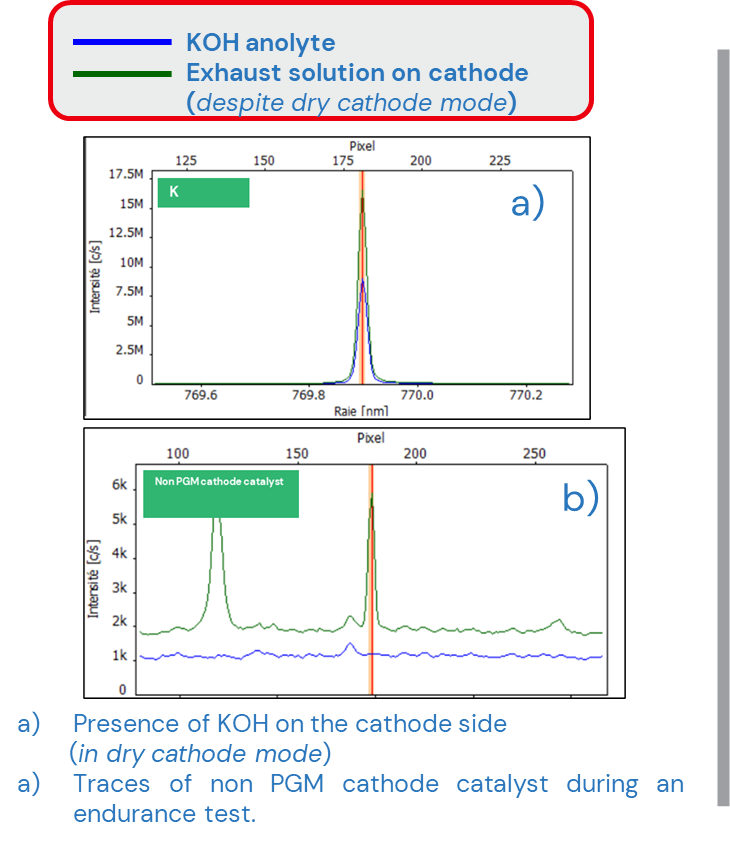
The PL6 pilot line focuses on hydrogen production using anion exchange membrane technology. It provides services ranging from membrane electrode assembly manufacturing up to 200 cm² to electrochemical testing, including IV curves and electrochemical impedance spectroscopy, on single cells up to 200 cm². In addition, an online gas analyzer is connected to the cell to monitor hydrogen permeation across the membrane in real time. Finally, off-line ICP-OES analysis is integrated to quantify trace impurities originating from component degradation that may be present in the anolyte, ensuring reliable performance and durability evaluation under relevant operating conditions for advanced hydrogen systems development.
Key Characteristics & Goals
- Advanced Manufacturing: Bar coating on membranes
- Scalability: from 25 to 200 cm²
- Precision Testing: [e.g., In-situ degradation analysis]
Material Innovation: [e.g., Low-iridium catalyst loading]
Benefits & Potential
- For Industry: Reduced time-to-market for new stack components.
- Cost Efficiency: Validation of cheaper material alternatives without the need for in-house infrastructure.
Performance: Significant increases in current density and operational lifetime.
Technical Specs
Tools | Loading control | Cell performance | Gas Analyses | Liquid Analyses |
XRF mapping | mg/cm² | |||
Electrochemical testing | IV curve (EU Target 1.8 V @ 1.5 A/cm²) EIS | |||
µGC | Membrane Permeabilty < 3.10-12 mol/cm.s.bar) | |||
ICP-OES | Traces of ppm contaminants in aged anolyte or catholye |